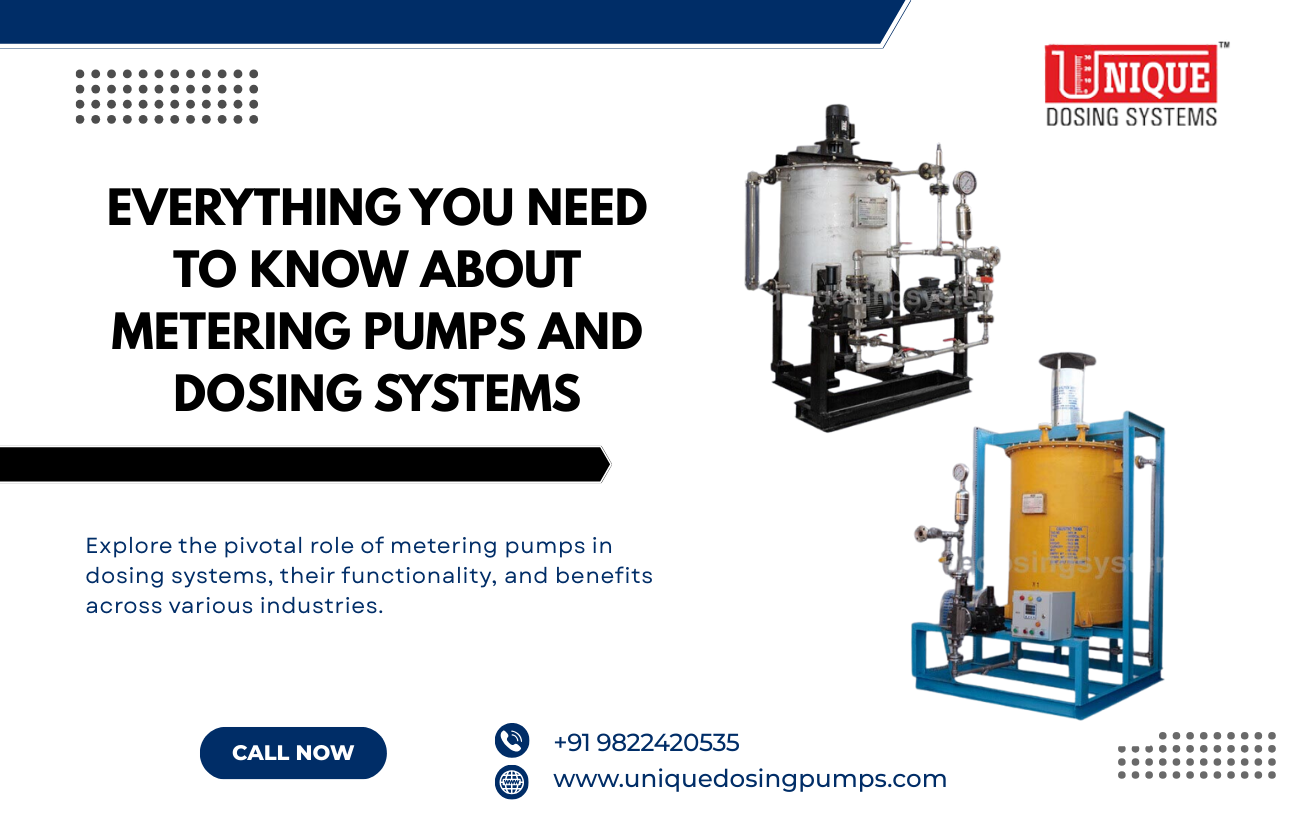
The use of cutting-edge technology in fluid management has not only advanced industrial operations but also provided enhanced precision and efficiency. Among these technologies, metering pumps hold a crucial place, particularly within dosing systems. This blog post delves into the essentials of metering pumps, their types, applications, and why they are vital in industrial processes.
What are Metering Pumps?
Metering pumps are specialized precision pumps designed to move exact volumes of fluid within a specified time frame. They are often used where precise dosing is essential, hence they are a fundamental component of dosing systems. These pumps are characterized by their ability to deliver a clear ascertainable amount of liquid, with near-perfect precision, often being adjustable to meet specific operational requirements.
Types of Metering Pumps
There are several types of metering pumps available to suit different applications:
- Diaphragm Pumps: Known for their durability and chemical resistance, diaphragm pumps use a reciprocating diaphragm to transfer fluid.
- Piston Pumps: These pumps use a piston to move fluids and offer precise volume control, making them ideal for high-pressure applications.
- Peristaltic Pumps: Utilizing rotating rollers to compress a flexible tube, these pumps are effective for shear-sensitive fluids or those with particulates.
The Role of Metering Pumps in Dosing Systems
Dosing systems, consisting of metering pumps, are critical across various industries, including water treatment, chemical processing, and food and beverage industries. Their role is to ensure that the exact amount of a particular substance is added to a process or system, maintaining optimal balance and process efficiency.
Benefits of Using Metering Pumps
The benefits of using metering pumps within dosing systems are manifold:
- Precision: They provide accurate dosing, ensuring consistency in formulation and processes.
- Efficiency: By automating the dosing process, they can reduce labor costs and the potential for human error.
- Versatility: Metering pumps can handle a wide range of fluids, including corrosive, viscous, and shear-sensitive materials.
- Sustainability: Precise dosing minimizes waste, leading to more sustainable and environmentally friendly operations.
Conclusion
In conclusion, metering pumps are indispensable components of effective dosing systems. Their ability to deliver controlled, repeatable fluid flow makes them invaluable in numerous industries where precision is paramount. As the demand for efficient and sustainable processes grows, the role of metering pumps is set to become even more significant.
Understanding the types and capabilities of metering pumps can help businesses select the right equipment, optimize their processes, and maximize operational efficacy. Whether improving product quality, reducing costs, or enhancing sustainability, the impact of a metering pump cannot be overstated.
Published on December 21, 2025 by Admin