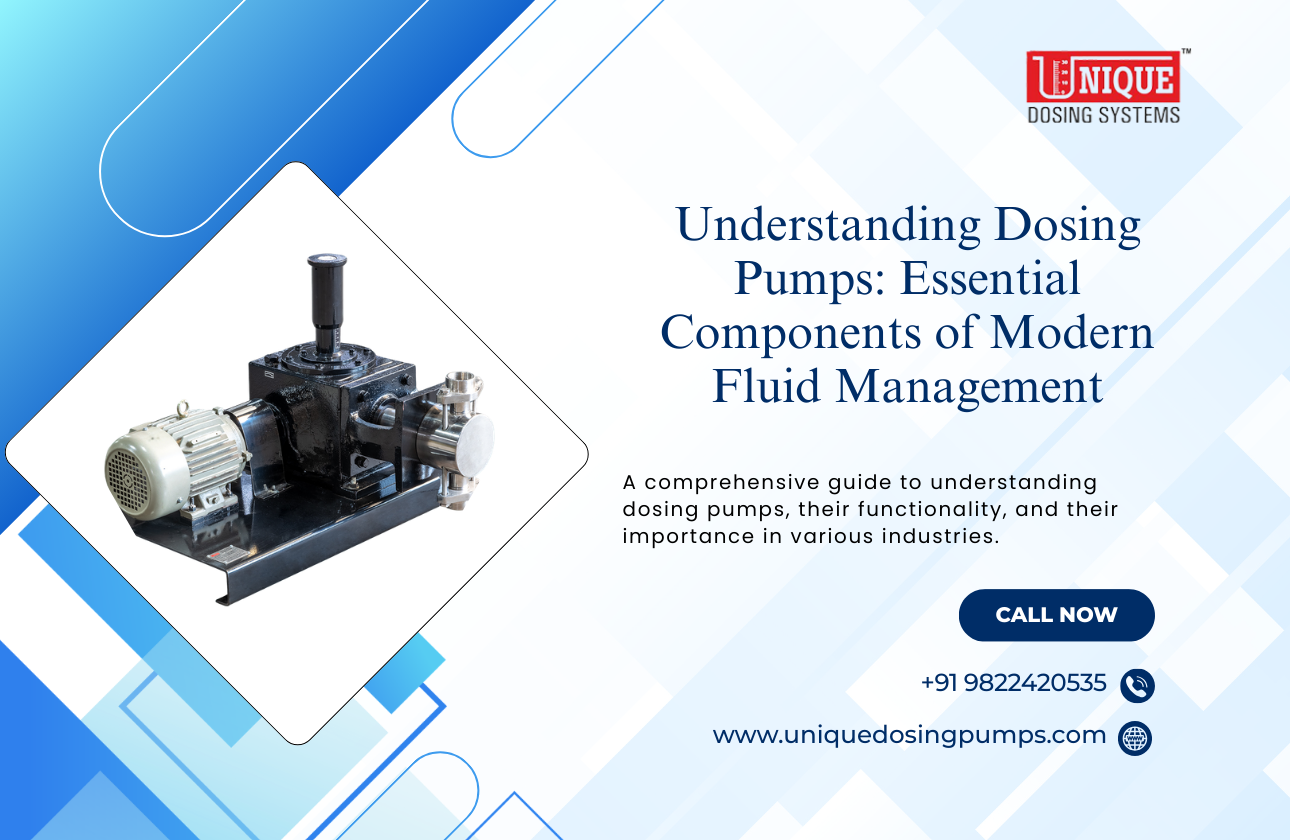
What is a Dosing Pump?
Dosing pumps are essential tools used in many industries for precise fluid management. Often referred to as chemical metering pumps, they are designed to deliver an exact amount of liquid at a consistent flow rate. Many industries use these pumps because they require accurate amounts of chemicals, additives, or other substances to ensure their processes run smoothly. The primary function of dosing pumps is to inject the correct volume of liquid into another stream to achieve the desired chemical balance.
Importance of Dosing Pumps in Industries
Dosing pump are vital in numerous industries such as water treatment, agriculture, and pharmaceuticals. For instance, in water treatment, they help in adding chlorine or other purifying agents to maintain the water quality. In agriculture, they are used to distribute fertilizers in precise amounts, ensuring plants receive nutrients as needed without waste. This precision helps enhance the efficiency of processes, minimize waste, and boost productivity, making them indispensable in modern industrial applications.
How Do Dosing Pumps Work?
Dosing pumps function by drawing a precise volume of liquid into a chamber and injecting it into a discharge line. They can operate manually or automatically, controlled via computer systems or sensors that monitor various factors such as pressure, flow rate, or liquid levels. For more detailed insights into their construction and mechanism, you can explore this comprehensive guide. Their output can be adjusted according to the requirements, making them highly versatile tools in fluid control applications.
Types of Dosing Pumps
There are several types of dosing pumps, including diaphragm, peristaltic, and piston pumps. Diaphragm pumps are commonly used due to their ability to handle a wide range of fluids. Peristaltic pumps are ideal for applications requiring contamination-free and gentle transfer of fluids. Piston pumps are typically used for high-pressure applications. Each type comes with its own set of advantages and is selected based on the specific needs of the application. Understanding these types helps in choosing the right pump for your specific needs.
Choosing the Right Dosing Pump
Selecting the appropriate dosing pump involves understanding the application's requirements, the nature of the fluid, and the desired pressure and flow rate. Other factors include the pump's compatibility with the fluid being used and its resistance to potential corrosion or chemical reactions. For guidance on selecting the right pump, this resource provides useful insights into key considerations for optimal performance.
Maintenance and Troubleshooting of Dosing Pumps
Regular maintenance of dosing pumps ensures their longevity and continues operational efficiency. This involves routine checks on components, cleaning, and replacing worn-out parts. If you notice inconsistencies in the flow rate or leaks, it's essential to address these issues promptly to prevent downtime. Troubleshooting involves checking the seals, valves, and connections that may require tightening or replacement. Understanding these maintenance tips can significantly enhance a pump's lifespan and reduce repair costs.
Frequently Asked Questions
1. What is the primary use of dosing pumps?
Answer: The primary use of dosing pumps is to deliver exact amounts of liquid at consistent rates in various industries, ensuring precision in chemical, fluid management, and treatment processes.
2. How can I choose the right type of dosing pump for my needs?
Answer: Choosing the right pump depends on the intended application, fluid type, required flow rate, and pressure. Considerations also include the pump's compatibility with the fluid and resistance to corrosion or reactions. Resources like online guides can offer valuable insights.
3. Why is maintenance critical for dosing pumps?
Answer: Regular maintenance is vital for ensuring dosing pumps operate efficiently, enhancing their lifespan, and preventing costly downtime due to unexpected failures or leaks.
4. What industries rely heavily on dosing pumps?
Answer: Industries such as water treatment, agriculture, and pharmaceuticals heavily rely on dosing pumps for their ability to deliver consistent and precise amounts of chemicals, additives, or nutrients.
5. What should I do if my dosing pump shows decreased performance?
Answer: If your dosing pump shows reduced performance, check for leaks, loose connections, or worn-out parts. Routine inspections and replacements of faulty components are necessary to restore optimal functioning.
Published on March 7, 2026 by Admin