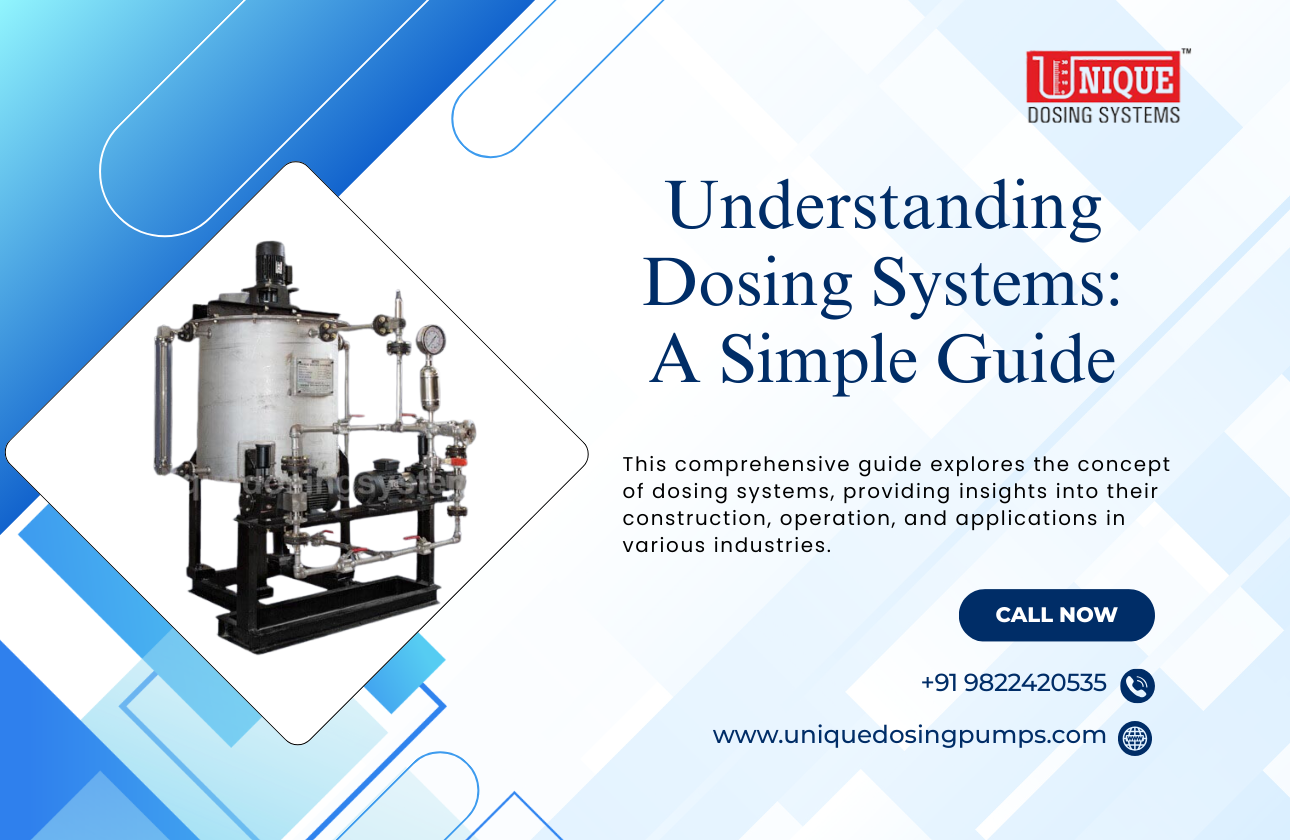
Introduction to Dosing Systems
Dosing systems are a crucial component in many industries, responsible for ensuring precise fluid management. They can handle everything from chemicals to food-grade liquids. The goal of a dosing system is to add an accurate amount of substance to a larger system. This accuracy is vital in processes like water treatment, where the correct balance of chemicals is critical to safety and effectiveness. With advancements in technology, these systems have become more reliable and efficient, meeting the growing demands of modern industry.
How Dosing Systems Work
Dosing systems operate by using pumps to control the volume of liquid added to a process. These pumps are powered by motors and can be controlled manually or through an automated system. Sensors and control systems often govern them, ensuring precision and consistency. This setup allows for fine-tuning the dosing process to always provide the right quantity, leading to more efficient processes and reduced waste. Whether it is adding chlorine to water or measuring out additives in food production, dosing systems are engineered for precision work.
Types of Dosing Systems
There are several types of dosing systems available, each suited to different applications. Manual dosing systems require human intervention, making them suitable for processes that do not demand high precision. Automated dosing systems, on the other hand, allow for consistent, high-volume dosing. These systems can control multiple parameters and adjust dosing levels in real-time. Another type is the metering pump system, which is highly accurate and often used in chemical and pharmaceutical industries.
Benefits of Using Dosing Systems
The advantages of using dosing systems are numerous. For starters, they ensure precision and accuracy, reducing human error in fluid delivery. This accuracy is crucial in many applications where even slight deviations can lead to significant issues. They also save time and reduce wastage, which is both environmentally and cost-effective. Moreover, dosing systems enhance safety by minimizing human exposure to potentially hazardous materials. Industries looking to optimize their processes often turn to dosing systems as a reliable solution.
Industries Using Dosing Systems
Dosing systems find applications across a wide range of industries. Water treatment facilities use them to add chemicals that purify the water. In the food and beverage industry, dosing systems are employed to flavor and preserve products. The pharmaceutical industry relies on these systems for the precise mixing of active ingredients in medicines. Each industry benefits from the system's ability to enhance precision and streamline production processes. With such versatility, dosing systems have become a staple in these sectors.
Challenges in Implementing Dosing Systems
Despite their advantages, implementing dosing systems can come with challenges. One common issue is the complexity of installing and configuring these systems, which can often require specialized knowledge. Maintenance is another consideration, as these systems need regular checks to ensure efficiency. Additionally, replacing parts can be costly, and downtime during maintenance can disrupt production. However, these challenges are outweighed by the benefits, especially when long-term productivity and safety are considered.
Future of Dosing Systems
The future of dosing systems looks promising as technological advances continue to improve their efficiency and reliability. Automation is expected to play a more significant role, with smart systems being able to adjust parameters based on real-time data. These improvements mean that dosing systems will become even more precise and integrated into more industrial processes. The focus will also likely be on making these systems more environmentally friendly, reducing emissions, and improving energy efficiency. As industries prioritize precision and sustainability, dosing systems will continue to be an essential component.
Frequently Asked Questions
1. What is a dosing system?
Answer: A dosing system is a setup that accurately administers a specific amount of substance into another medium. They are essential in ensuring that precise amounts of chemicals or other fluids are introduced into processes like water treatment or manufacturing.
2. Why are dosing systems important in industries?
Answer: Dosing systems play a significant role in industries as they guarantee process accuracy, improve safety, and reduce wastage. By delivering precise quantities, they enhance product quality and consistency, which are vital for industrial operations.
3. What are common features of dosing systems?
Answer: Common features include pumps, control systems, sensors, and sometimes software for automation. These allow the systems to manage the distribution of substances accurately and efficiently.
4. Can dosing systems work with both liquids and gases?
Answer: Yes, dosing systems can be designed to handle both liquids and gases. They are versatile and applicable in different settings, adjusting to the specific requirements of the application.
5. How does automation benefit dosing systems?
Answer: Automation enhances dosing systems by enabling continuous and consistent operation without human intervention. This leads to increased efficiency, reduces errors, and allows for real-time adjustments based on environmental or process conditions.
Published on March 6, 2026 by Admin