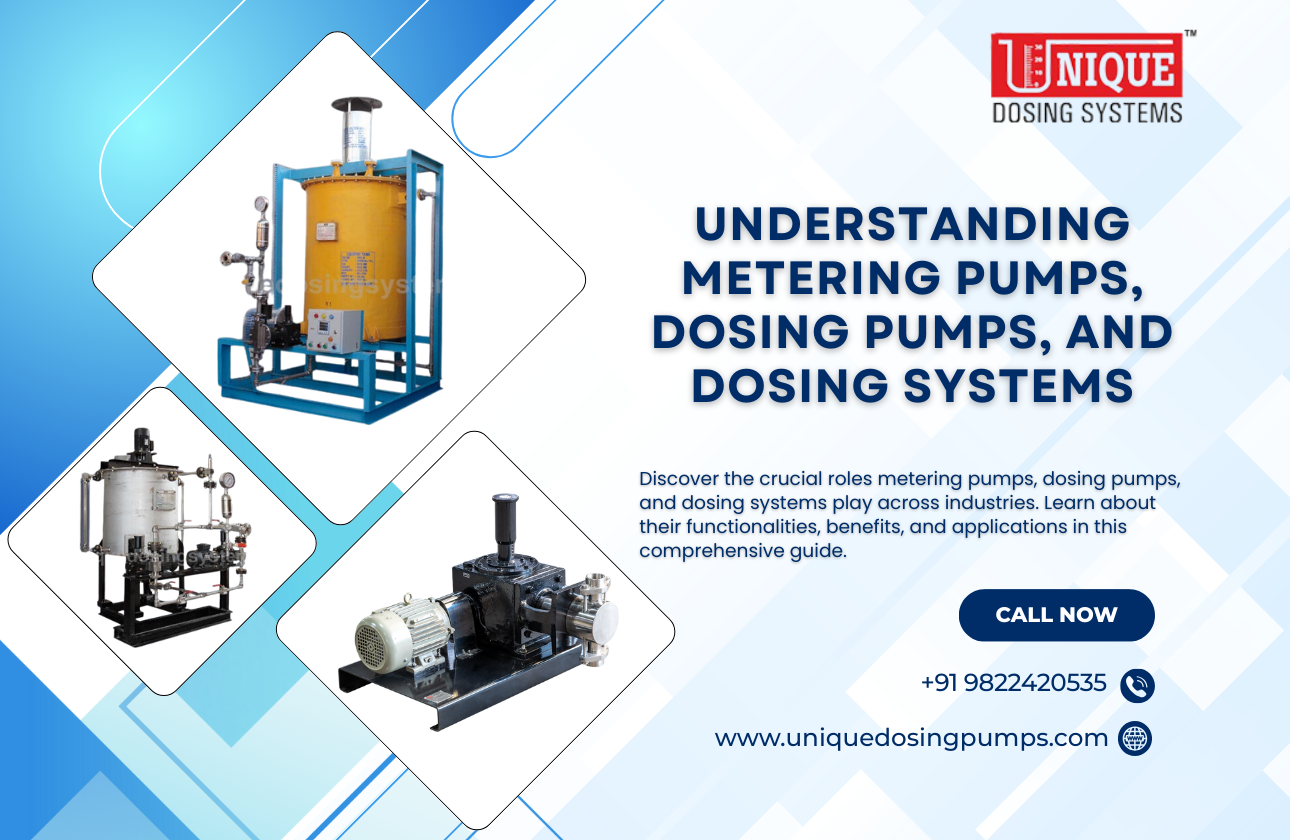
Understanding Metering Pumps, Dosing Pumps, and Dosing Systems
In today’s technology-driven world, precision and efficiency are crucial across various industries. This is especially true when it comes to the handling and distribution of chemicals and fluids. Metering pumps, dosing pumps, and dosing systems play vital roles in ensuring accurate and controlled delivery of fluids. Understanding their functions, benefits, and applications can greatly optimize processes across multiple sectors.
What are Metering Pumps?
Metering pumps are highly precise, adjustable flow pumps. They are typically used to deliver accurate amounts of fluids over a period of time. These pumps are essential in industries where exact chemical dosing pumps is a necessity, such as water treatment, chemical processing, and food production.
Metering pumps operate by drawing fluid into a chamber and then displacing it using a positive displacement mechanism. Their ability to provide exact flow rates makes them invaluable in maintaining consistency and quality in various applications.
The Role of Dosing Pumps
Dosing pumps are a subset of metering pumps that are specifically designed to inject a fixed amount of a liquid into a process fluid stream. These pumps are vital in scenarios where the concentration of a substance needs to be controlled precisely. Industries such as pharmaceuticals, food and beverage, and environmental protection rely on dosing pumps to maintain strict quality standards.
A dosing pump ensures that a specific amount of chemical or nutrient is added within a set timeframe, maintaining the desired properties of the process stream. This capability is essential for managing chemical reactions and ensuring safety in operations.
Components and Functionality of Dosing Systems
Dosing systems incorporate pumps along with other equipment to form a complete solution for fluid distribution. These systems typically consist of various components such as storage tanks, control units, valves, and sensors. Each component plays a critical role in ensuring the system functions efficiently and meets the required standards for precision and safety.
The functionality of dosing systems includes automated chemical dosing, which can be adjusted based on real-time data inputs. This automation leads to minimized human error, reduced wastage, and improved operational efficiency. Advanced dosing systems can integrate with existing software to provide data analytics, monitoring, and remote operation capabilities.
Applications in Various Industries
The versatility of metering pump, dosing pumps, and dosing systems makes them indispensable across a range of industries:
- Water Treatment: Ensuring the correct dosage of chlorine and other chemicals to purify water efficiently.
- Pharmaceuticals: Accurate dosing of raw materials to maintain product consistency and safety.
- Food and Beverage: Precise addition of flavors and preservatives to meet taste standards and regulatory requirements.
- Oil and Gas: Managing corrosion inhibitors and other chemicals to maintain pipeline integrity.
Conclusion
Metering pump, dosing pumps, and dosing systems are essential technologies that provide accuracy, efficiency, and control in fluid handling across numerous applications. Understanding their operation and benefits aids in optimizing industrial processes, ensuring safety, and maintaining quality standards. As industries continue to embrace automation and digital solutions, the roles of these pumps and systems are set to become even more integral.
Published on December 22, 2025 by Admin